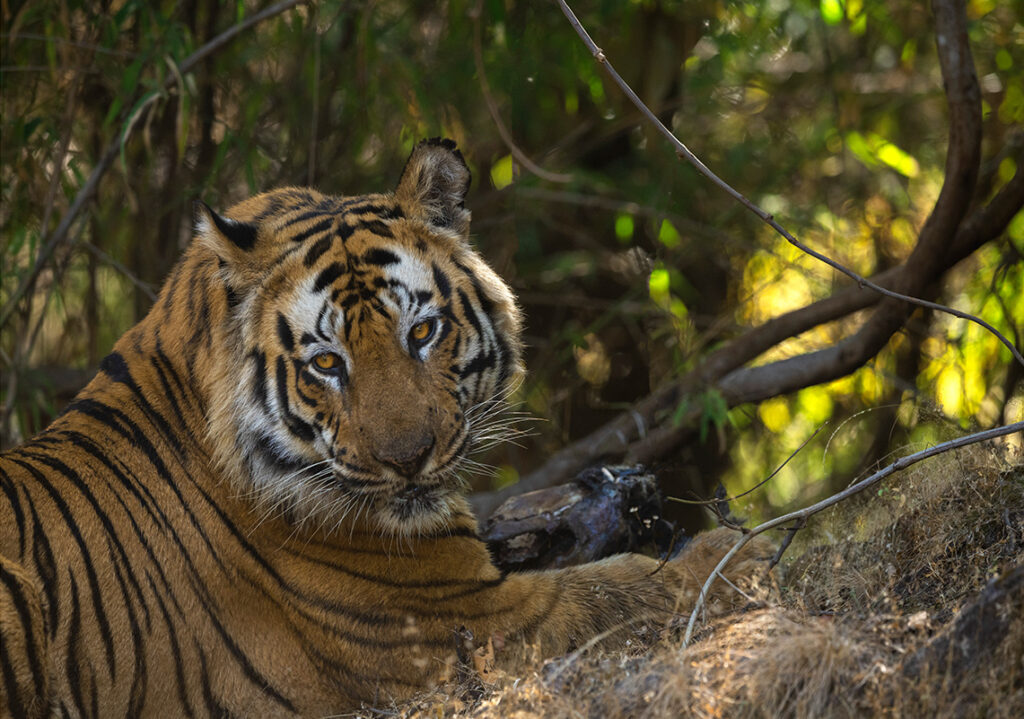
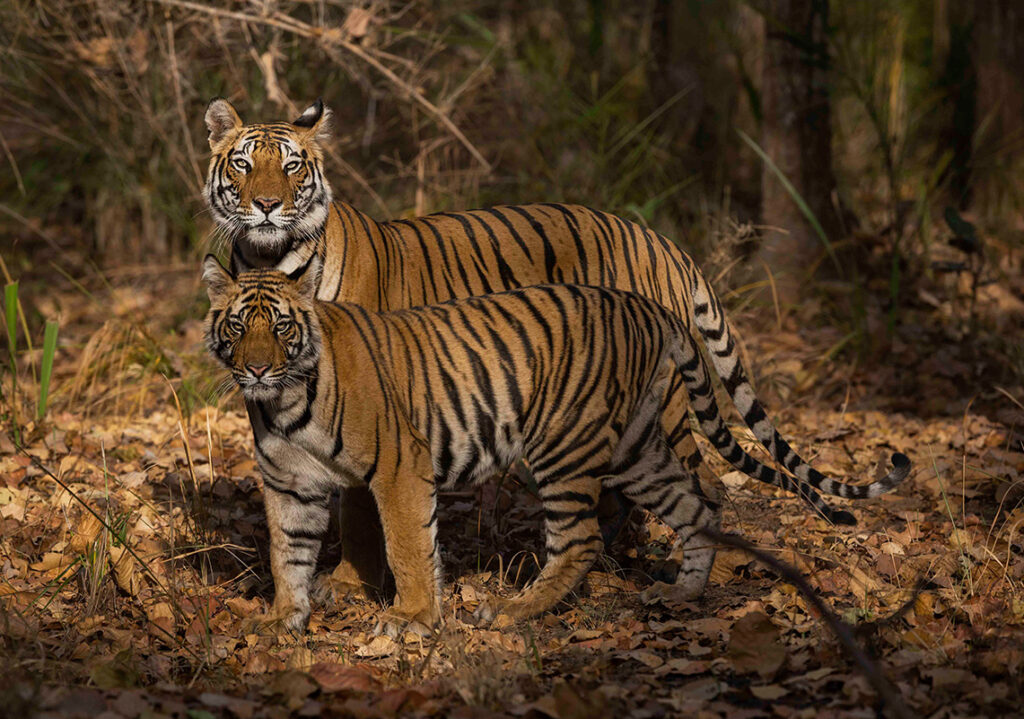
Bandhavgarh National Park is known for having the highest density of tigers in the world.
250
Species of birds
90
Tiger Individuals
37
Species of Mammals
Bandhavgarh was the former hunting preserve of the Maharaja of Rewa. White Tigers, now a major attraction around the world’s zoos, were first discovered in Rewa, not far from here. The terrain is broken, with rocky hill ranges, running roughly east to west, interspersed with grassy swamps and forested valleys.
The vegetation is chiefly Sal Forest in the valleys and on the lower slopes, gradually changing to mixed deciduous forests on the hills and in the hotter drier areas of the park in the south and the west. The wide valleys along the streams have long linear grasslands flanked by Sal Forests. These together provide Bandhavgarh with its rich diversity.
Home of the Royal Bengal Tiger
Bandhavgarh has always been an excellent tiger habitat and is known for the highest density of Tigers in the world. Some of the most famous tigers to have inhabited Bandhavgarh and immortalized in BBC and National Geographic documentaries include Charger and Sita, B2, Bhokha, Bamera, Jhujhura female to name a few. The current dominant males in the park include the Mahaman Male, Bajrang, D1 and Chota Bheem
Multiple breeding females
Bandhavgarh is home to multiple breeding females that can be seen within the tourism areas of the park. Among them, Kajri, Chakradhara female, and Banbehi females currently dominate the stunning Tala zone of the park. Then there is the gorgeous Dotty, Mahaman female & Darra female who make up the other few
Amazing Wildlife
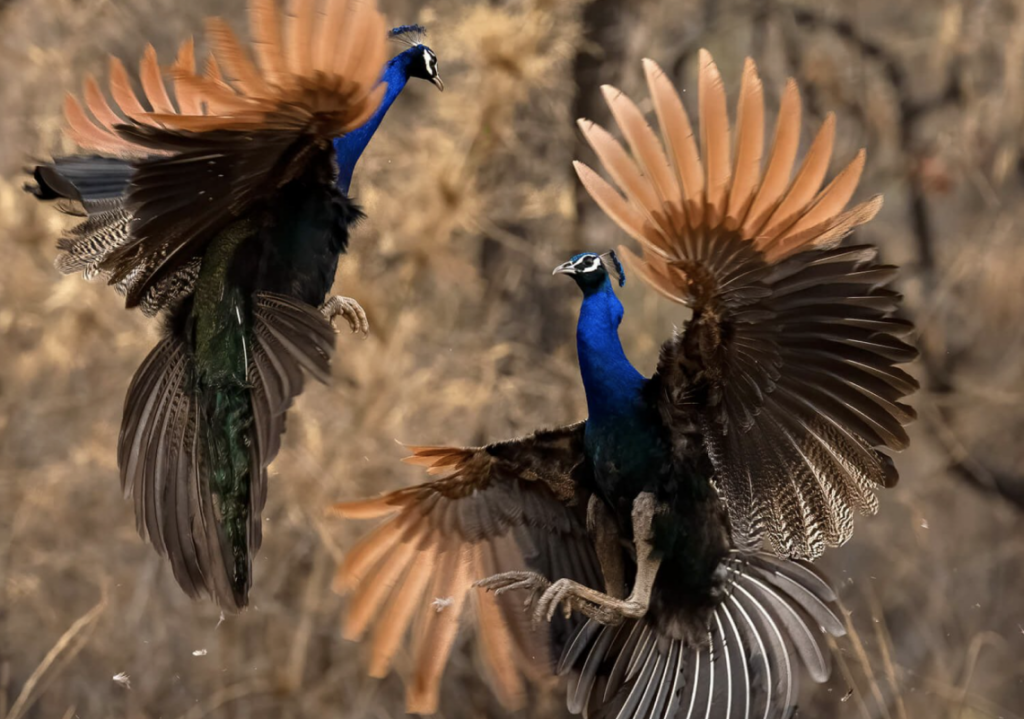
Bandhavgarh is also home to more than 37 species of mammals and more than 250 species of birds along with about 80 species of butterflies and a number of reptiles. Apart from the Tiger, the mammals living in Bandhavgarh include leopards, wolves, hyenas, wild dogs (Dhol), Indian Gaur, spotted deer (Chital), Sambhar Deer, Barking Deer, Sloth Bear, and many more.
With a collective experience of over 5 decades,
we are the most experienced guiding team in Bandhavgarh
Special Privilege
To guarantee the most intimate safari experience we only take 9 guests per batch. We also have the lodge at our exclusive disposal.
100% Tiger sighting record
We pride ourselves on being 100% successful in providing tiger sightings. Our guiding team has a collective experience of over 5 decades tracking tiger families in Bandhavgarh.
Exclusive Access
Our guests enjoy exclusive access to this property, making us the only fully inclusive safari experience in the country, complete with complimentary drinks and laundry services.
All things Unique
Get access to all three core area zones of the park and stay inside of the park during non-tourism hours. One full-day permit per trip will allow you to enter the park 15 minutes before and after normal tourism hours, giving you a great chance for private encounters.